
Appleby's cheese


Written and photographed by Mark Lewis

Travelling from South to North Shropshire you immediately notice the land changes from the rolling hills of the Long Mynd to the edge of the Cheshire plains, whilst grazing sheep and lambs give way to cattle and crops.

Arriving at Hawkstone Abbey Farm to meet Sarah and Paul, the current custodians of the family farm and cheese production, I felt like I was stepping back in time to my Shropshire childhood in the 60’s of lazy summer days and a slower pace of life.

I was welcomed by Sam, one of Sarah and Paul’s five children, and after a brief introduction Sam explained that he was in his first year at Harper Adams University, learning new skills to support the family business. Sarah and Paul then appeared and my visit to the dairy was underway.
Cheese was first produced in 1952, after Paul’s grandparents bought the farm and began making traditional Cheshire cheese. Paul’s parents then took the reins, continuing the production until the farm was passed on to Paul and Sarah.  

Cheshire cheese is a British territorial cheese, produced in a specific delimited area, but with Appleby’s cheese, there are two significant factors. Firstly, it is one of only two Cheshire cheeses still made from raw milk, only 2 raw milk Cheshire cheese producers remain from the 2000 producers in the 1950’s. Secondly, Appleby’s is possibly the only true Farmhouse cheese producer in the country, as the kitchen door from their house opens straight into the cheese production room, as was the traditional format, whereas most cheese producers now have separate purpose-built dairies and cheese production.

The farm has 350 cross breed cows which produce 3500 litres of milk a day, of which some is used in the cheese production. As Appleby is a raw cheese producer, the milk is not pasteurised for the cheese, or for whey butter, which they also produce. Each week Paul and Sarah make approximately 140 Midis of Cheshire cheese, a Midi being smaller in size than a Cheddar truckle.

Making the cheese

The raw milk is piped into a large retro-looking stainless-steel vat, still the original vat put into the dairy by Paul’s grandparents. Here Paul adds the traditional cultures, rennet, salt from the Cheshire Plains and extract of the annatto seed, which gives Appleby’s Cheshire cheese its colour. The paddles then gently stir through the milk until it begins to form a curd, eventually handheld knives cut through the curds to separate it from the whey.

The whey is then drained and used to make raw milk whey butter, and the curds are scooped out of the vat into moulds lined with cloths. The curd is packed into each pot and then each vintage cheese press is hand turned to extract any remaining whey. The newly formed Cheshire cheeses are then left in the presses for over 12 hours to allow the remaining moisture to drain away.

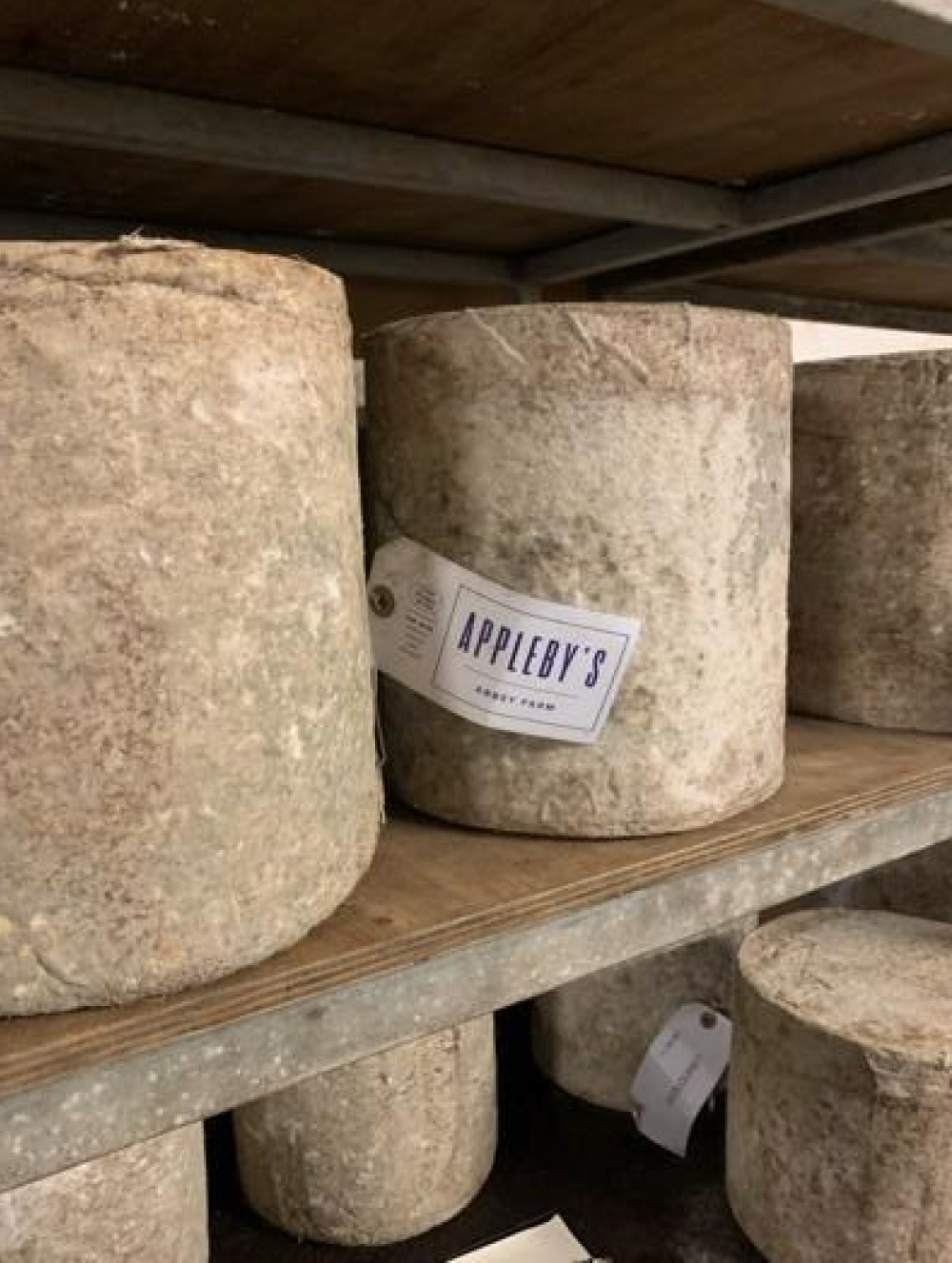
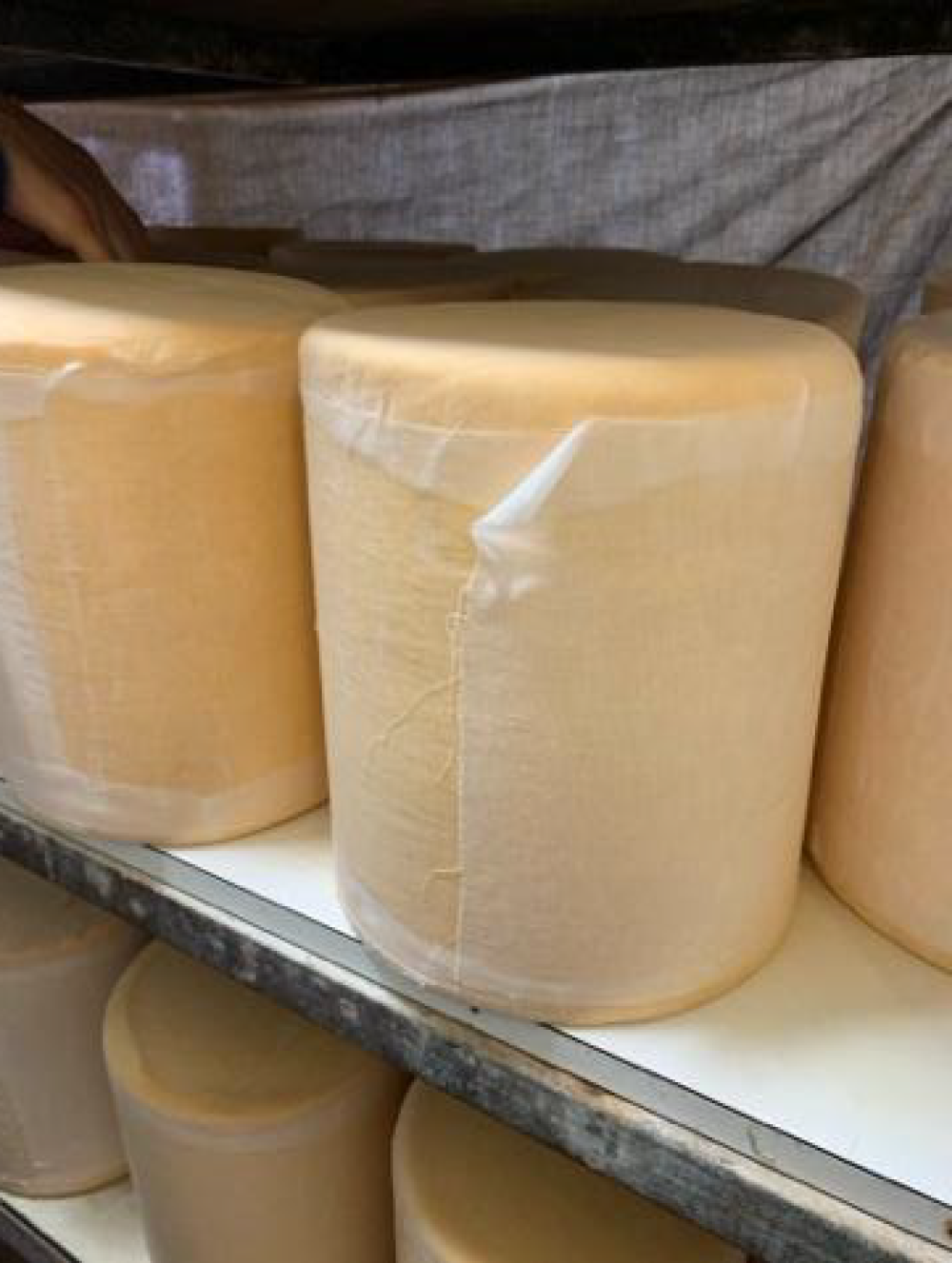
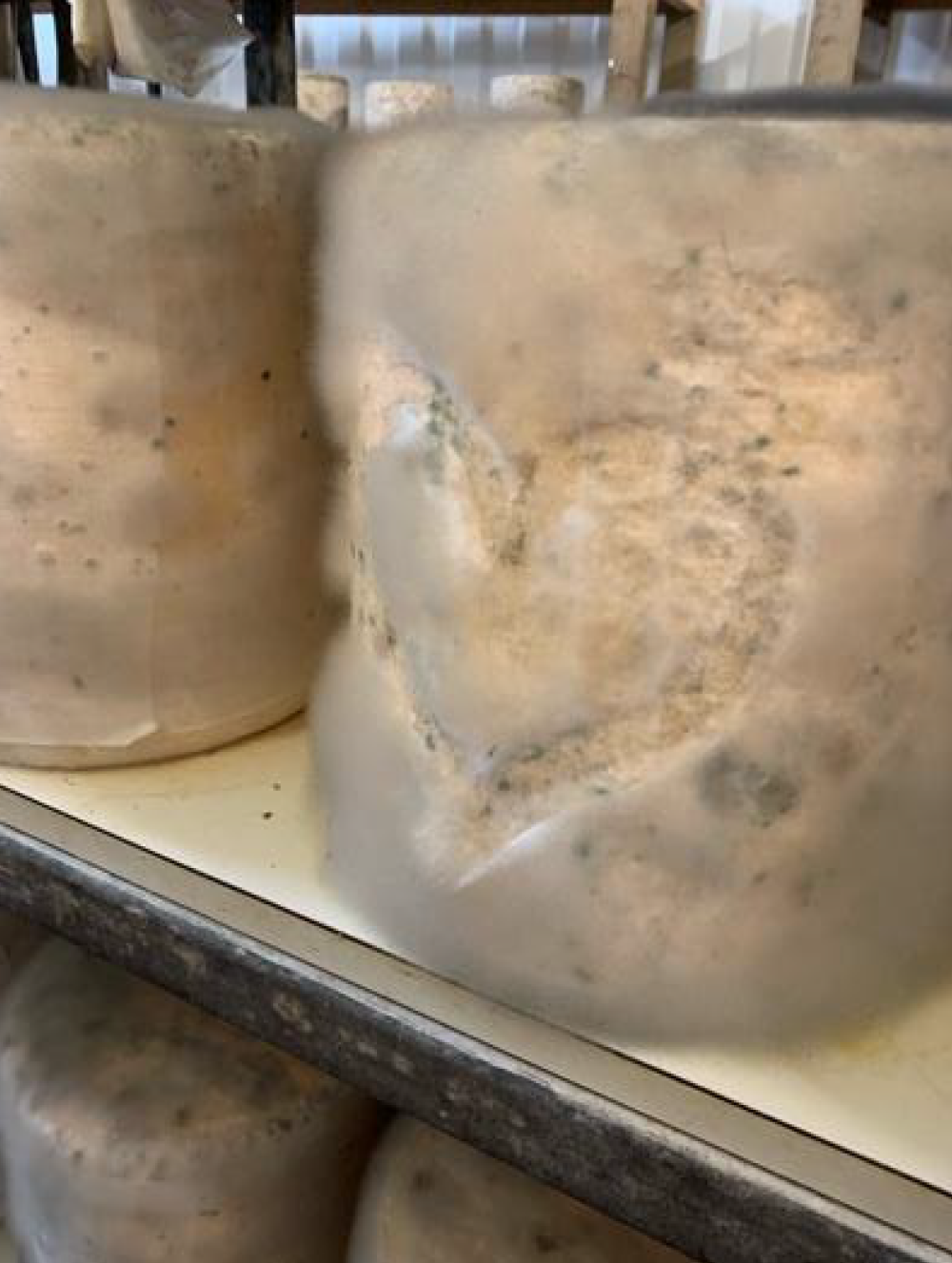
Each cheese is then carefully removed from the moulds and wrapped by hand in Calico, a fine cotton cloth. The now formed Midis are then moved on to shelving units in old barns on the farm, where the maturing process begins. Each of these Midis are matured for 12 weeks before they are sold and during this period each Midi cheese is turned by hand and wiped as a natural bloom of flora begins to form and impart unique flavours and balance of acidity.

The end result is a wonderfully delicate and crumbly pale orange coloured cheese, with a light fruity taste, ideally served with Shropshire or Worcestershire sparkling cider, a light beer or an English sparkling wine.

Paul and Sarah have a little down time in cheese production during July as the cows are dried off before calving. Their sustainable farm’s 350 cows enjoy outdoor grazing for most of the year, which is weather dependent. Paul and Sarah’s ethos is to have happy cows which are reared naturally with minimal intervention, thus producing delicious milk for their cheeses and whey butter.

Having previously worked in food retail and not production, I am in awe of artisan producers like Paul and Sarah, it looks like hard work, but at the same time must be very satisfying and rewarding, especially when they are at events such as Slow Food, talking about, and selling their finished products directly to the consumer, where they are able to judge the public reaction to the taste and texture of their cheese.

applebysdairy.com